
Promoting the introduction of fuel cell trucks
- 124 small fuel cell trucks at the end of FY 2024
- Large fuel cell trucks will be introduced from FY 2025 onwards
* Participate in social implementation projects involving automobile manufacturers, shippers, logistics companies, etc.
and collaborate with them
* Goal: Approximately 3,600 small trucks and 500 large trucks by the end of FY 2030
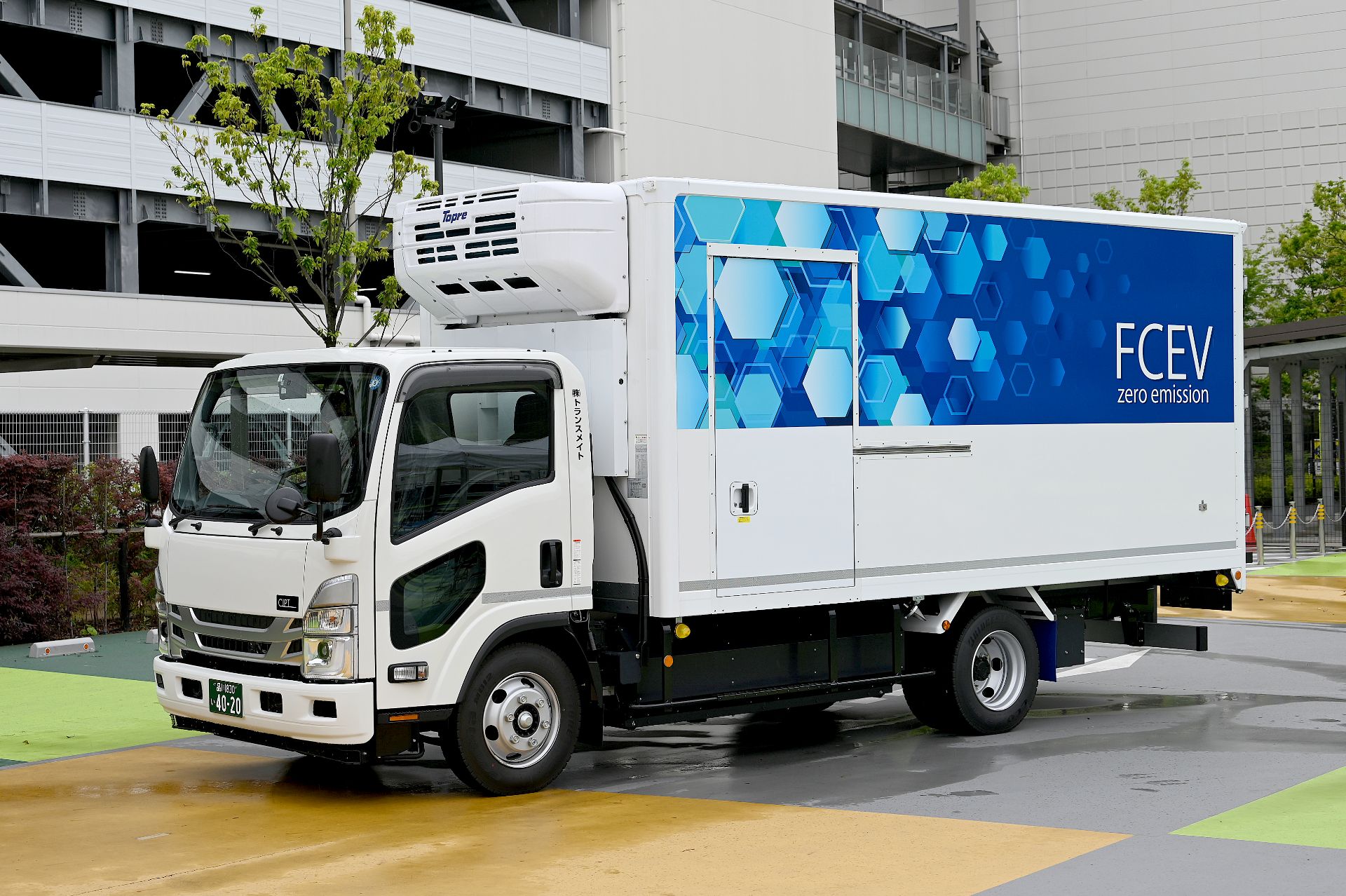 Small fuel cell truck
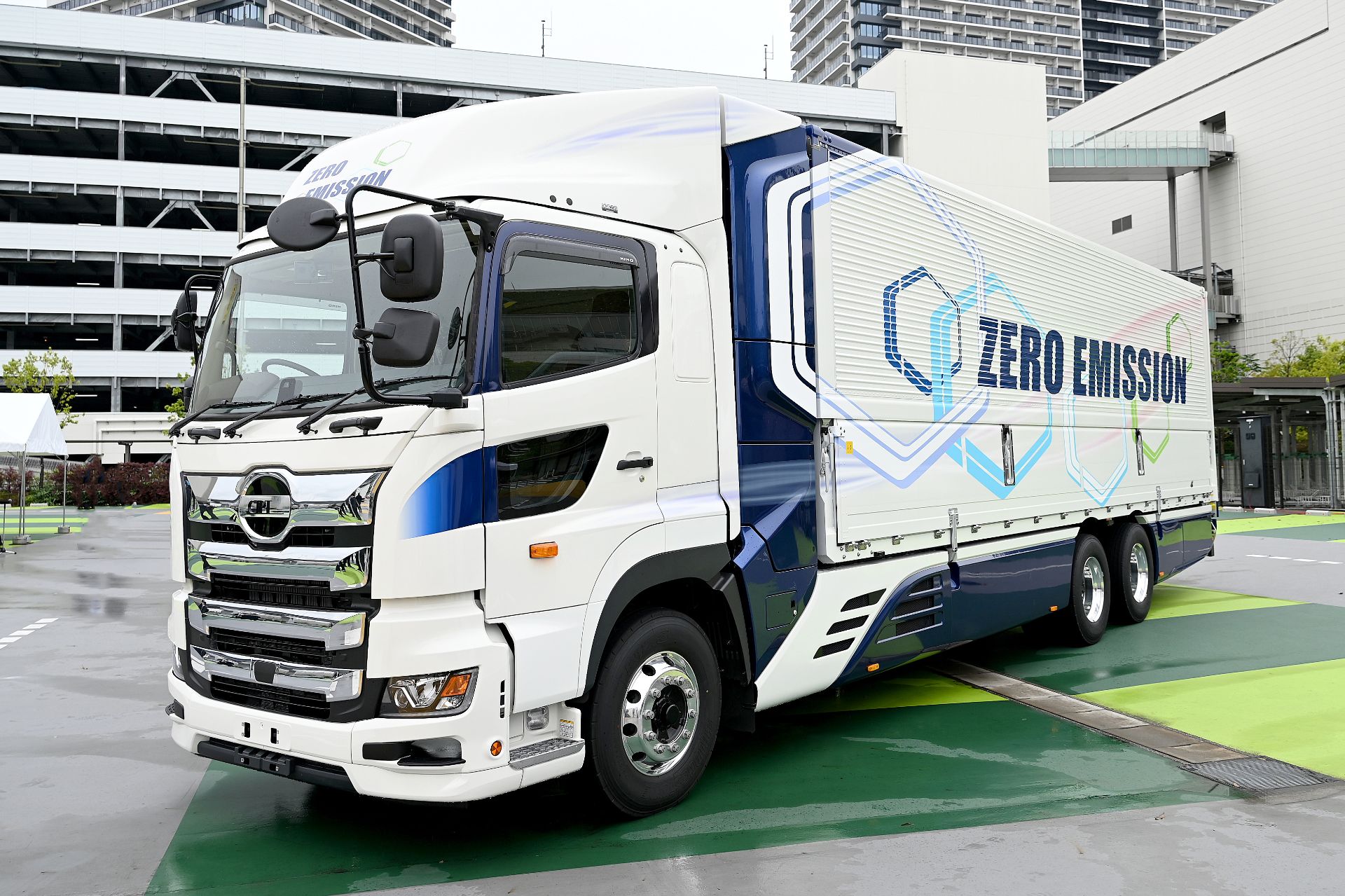 Large fuel cell truck
● Subsidizing introduction costs
Basic subsidies combined with national subsidies help ensure that vehicle prices (vehicle lease prices for SMEs) are the same as those of diesel trucks with equivalent specifications.
- Up to 13 million yen (26 million yen for SMEs) for small FC trucks
- Up to 56 million yen (96 million yen for SMEs) for large FC trucks
Subsidizing conversion costs: Up to 11 million yen that results from: (Cost of conversion to hydrogen engine trucks – National subsidies) x 2/3.
Additional subsidies apply to (1) Introduction plans of five or more vehicles* over five years, or (2) The case where a hydrogen refueling station is installed at sales offices etc.
- 34 million yen combined with basic subsidies for small FC trucks
- 115 million yen combined with basic subsidies for large FC trucks
-
11 million yen for hydrogen engine trucks
* Total planned number of FC trucks and hydrogen engine trucks: Three or more for SMEs, 10 or more for large enterprises if large FC trucks are not included.
● Subsidizing fuel costs
* Maximum subsidies are revised every fiscal year based on the price difference from diesel oil.
Subsidies are provided to cover the difference in costs between hydrogen and diesel oil.
- Up to 9 million yen for small FC trucks
- Up to 28.8 million yen for large FC trucks
- Up to 12 million yen for hydrogen engine trucks
